Tag Archives: Drone services St. Louis

FLIR Thermal Infrared Drone Services in St. Louis

For many organizations, the most expensive problems are the ones that are hard to see early. A roof system may look acceptable from the ground while moisture is spreading below the membrane. An electrical component may still be running while heat is building toward failure. A façade may appear sound in daylight while insulation voids, air leakage, or hidden moisture are quietly driving energy loss and maintenance costs.

That is where FLIR thermal infrared drone services can become a serious business tool.

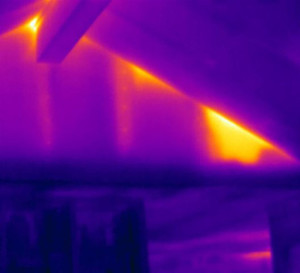
Thermal drone imaging gives decision makers a way to inspect large or hard-to-access areas with speed, perspective, and clarity. Instead of relying only on visible-light imagery, a thermal payload detects infrared radiation and converts temperature differences into a readable image. That makes patterns, anomalies, and changing conditions easier to identify across rooftops, building envelopes, utility assets, solar arrays, and industrial sites. Thermal imaging does not literally “see moisture” or “see through walls,” but it can reveal temperature patterns that often point inspectors toward wet materials, heat loss, overloaded components, or other hidden issues that deserve closer evaluation.

In St. Louis, where buildings and facilities are exposed to intense summer heat, winter cold, storms, humidity, and seasonal temperature swings, thermal drone inspections can be especially useful. The technology helps organizations move from guesswork toward evidence. It can reduce unnecessary disruption, narrow the search area for follow-up testing, and help teams prioritize maintenance based on actual conditions rather than assumptions.
What FLIR thermal drone imaging really does

A good thermal inspection is not simply a matter of putting a drone in the air and capturing colorful images. The value is in understanding what the camera is showing and what it is not.

A thermal camera records infrared energy and converts it into a visible thermographic image. But reliable interpretation depends on more than just the sensor itself. Accurate temperature analysis can be affected by emissivity, reflected temperature, ambient conditions, humidity, distance, and the relationship between the camera and the target surface. FLIR also notes that just because an object is visible in the image does not mean it is large enough in the frame for accurate temperature measurement; for quantitative work, the measurement target should adequately fill the measurement area, with FLIR giving a 3 x 3 pixel rule of thumb.

That matters for businesses because thermal drone service should never be sold as magic. It is a highly useful inspection and diagnostic tool, but it is best used by experienced operators who understand flight planning, environmental conditions, camera limitations, and post-processing workflow. The strongest service providers combine aerial capture with practical interpretation, reporting, and coordination with building, engineering, roofing, maintenance, or facilities teams.

Why drones make thermal inspections more valuable

Traditional thermal inspections from the ground still have their place. But drone-based thermal capture can add a major advantage: access.
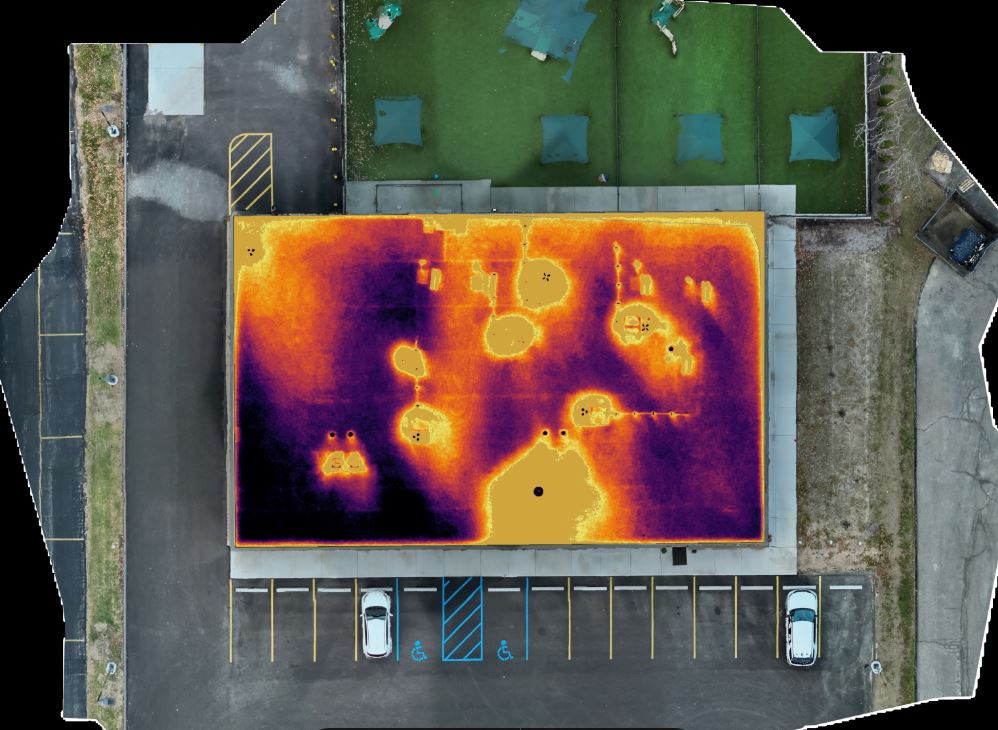
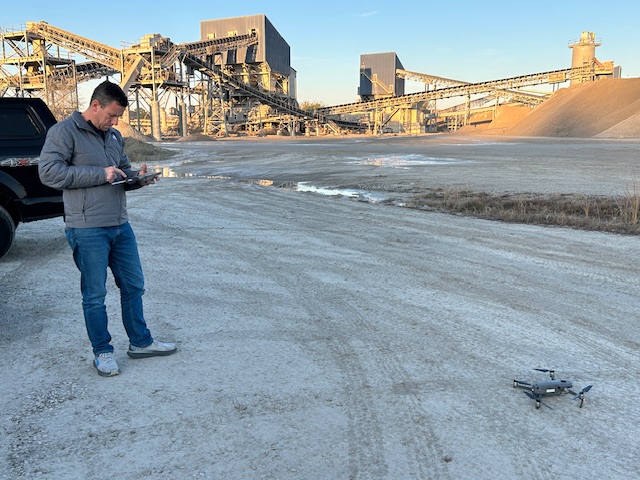
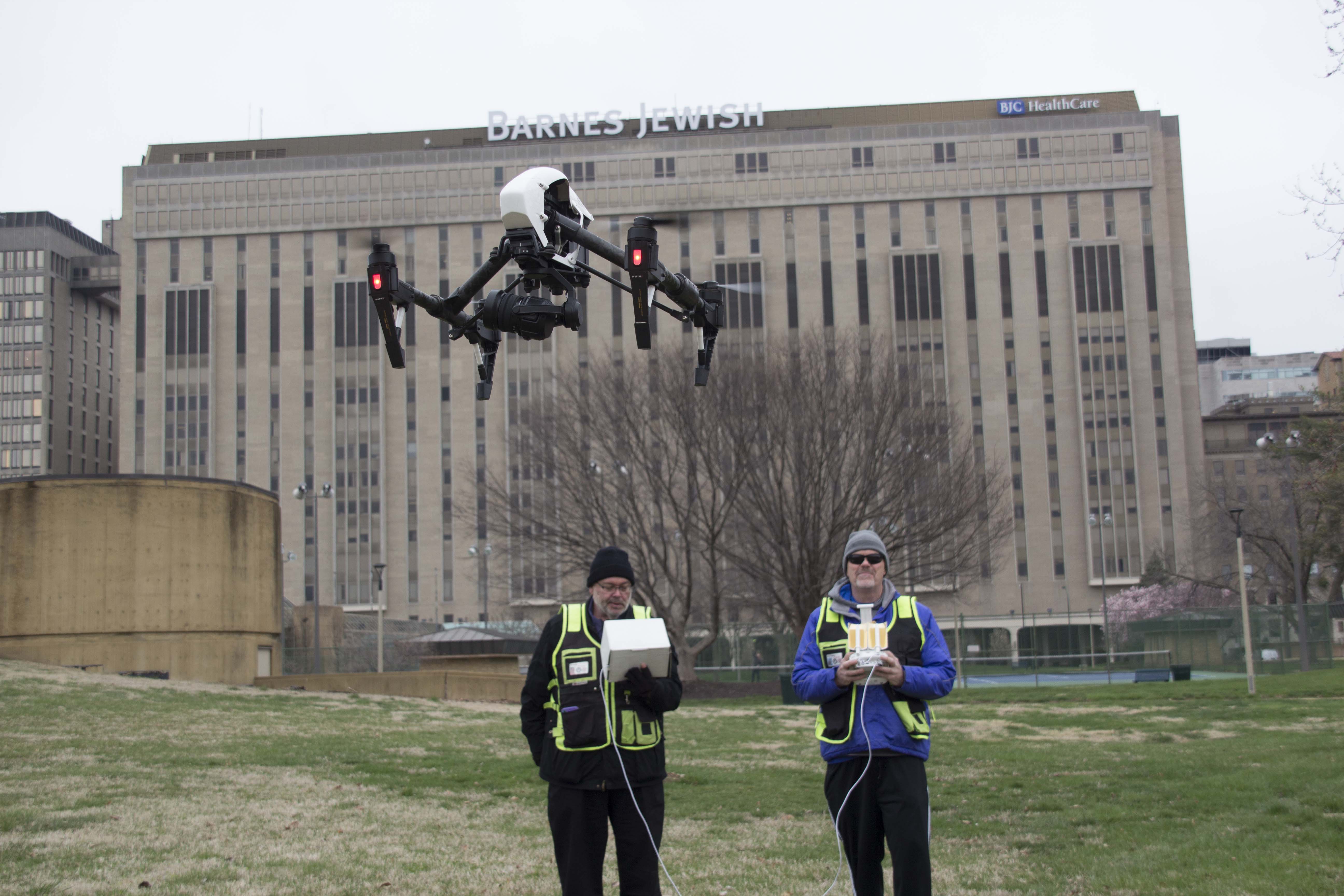
A drone can inspect elevated, expansive, or difficult-to-reach areas without requiring the same level of ladders, lifts, scaffolding, or physical roof access that may otherwise be needed. It can also capture a broader overhead view, helping clients see how isolated anomalies relate to the whole system. On large commercial rooftops, industrial facilities, and campus-style properties, that perspective can make pattern recognition far easier and far more efficient than walking the entire site manually.

Drone workflows also support organized reporting. FLIR’s own drone inspection guidance emphasizes that successful results depend not only on the flight, but also on correct image processing, measurement review, and reporting. In other words, the deliverable is not just imagery. The deliverable is actionable information.

Common business uses for FLIR thermal infrared drone services
Commercial roof inspections

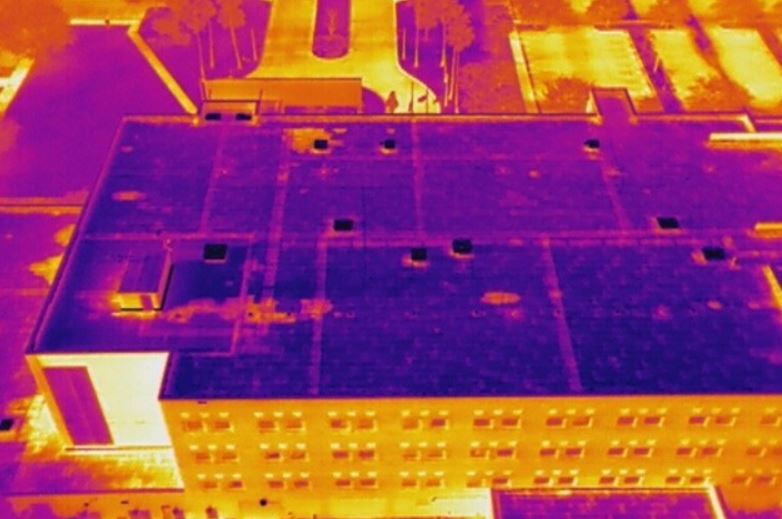
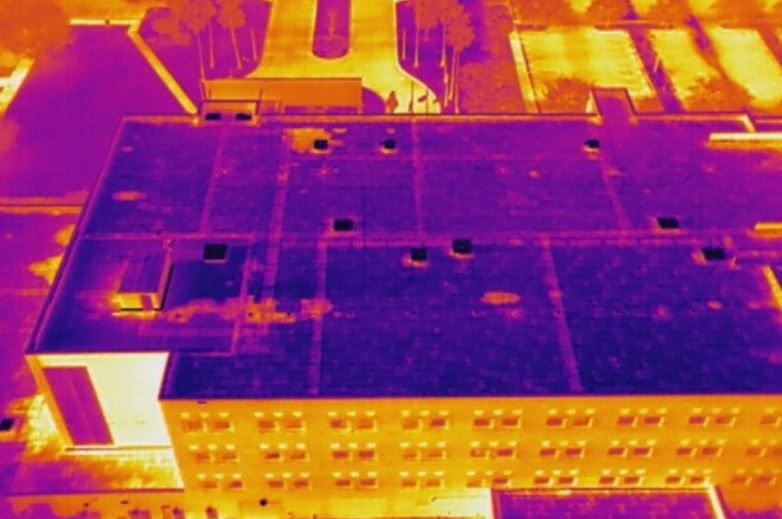
One of the most practical uses for thermal drone imaging is roof evaluation. Thermal patterns can help identify areas that may indicate trapped moisture, insulation issues, drainage concerns, or heat-related irregularities. That can be valuable for pre-maintenance planning, storm follow-up, capital budgeting, warranty discussions, and narrowing the areas that need invasive verification. Thermal imaging can point a team toward suspect areas faster, although final diagnosis often still requires moisture meters, core cuts, or additional inspection methods.

For St. Louis property owners and facility managers, that means a thermal drone inspection can be a smart screening tool before small problems become costly interior damage, tenant disruption, or emergency repairs.

Building envelope and energy diagnostics

Thermal imaging is also valuable for evaluating building performance. Temperature differences across walls, roof sections, and exterior assemblies can reveal patterns associated with insulation voids, thermal bridging, air leakage, or moisture intrusion. For organizations managing older buildings, campuses, warehouses, institutions, and multi-site properties, aerial thermal data can help identify where deeper building envelope analysis should be focused.

Electrical and mechanical inspection support

Abnormal heat is often one of the earliest warning signs that an electrical or mechanical problem is developing. Thermal imaging is widely used in electrical inspection because overheating components, failing connections, corrosion, and load imbalance can appear as temperature anomalies before visible failure occurs. That does not replace hands-on electrical testing, but it can be a powerful screening tool for identifying priority areas and documenting issues.
Solar array inspection

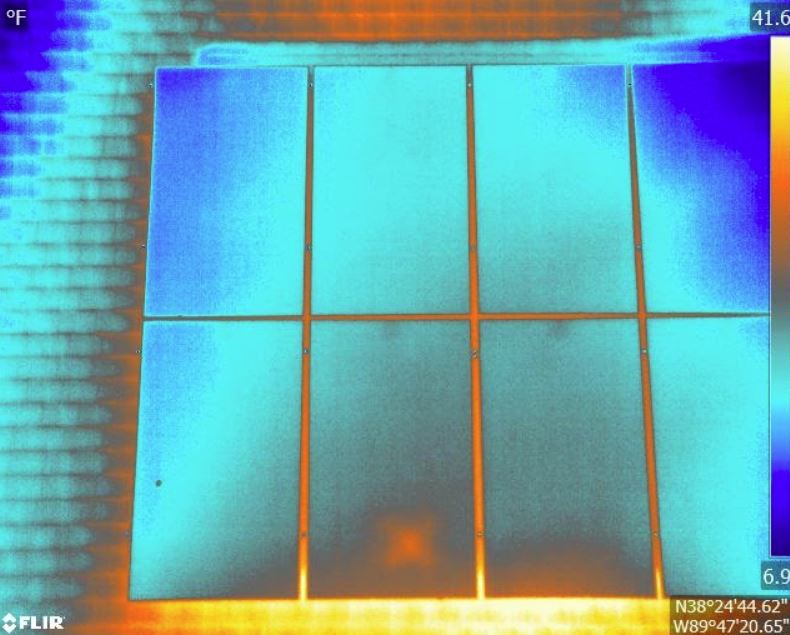
Thermal imaging can also be used on solar installations to identify hotspots and anomalies while panels are operating. For facilities teams and commercial property owners with rooftop or ground-mounted solar systems, that can support maintenance efficiency and performance monitoring across large arrays. FLIR materials specifically note the usefulness of thermal imaging for scanning installed solar panels during normal operation and over large areas in relatively short time frames.

Industrial sites, utilities, and facility documentation

Thermal drone imaging can support inspections at industrial properties, utility corridors, distribution centers, manufacturing sites, and large campuses. It is particularly useful when the goal is to quickly visualize heat-related anomalies over a broad area, then direct specialists to the right locations for repair, testing, or follow-up documentation.

What decision makers should look for in a thermal drone provider

Not all drone operators are the same, and not all thermal services are equal.

When evaluating a provider, businesses should look beyond the fact that a company owns a drone with a thermal sensor. The more important questions are these:

Does the team understand inspection workflow, not just flying?
Do they know how weather, surface materials, reflectivity, timing, and environmental conditions affect results?
Can they deliver both thermal and visible-light imagery for context?
Can they provide organized reporting that helps your facilities, engineering, marketing, or operations teams act on the findings?
Do they understand that some anomalies require confirmation with other methods before conclusions are made?
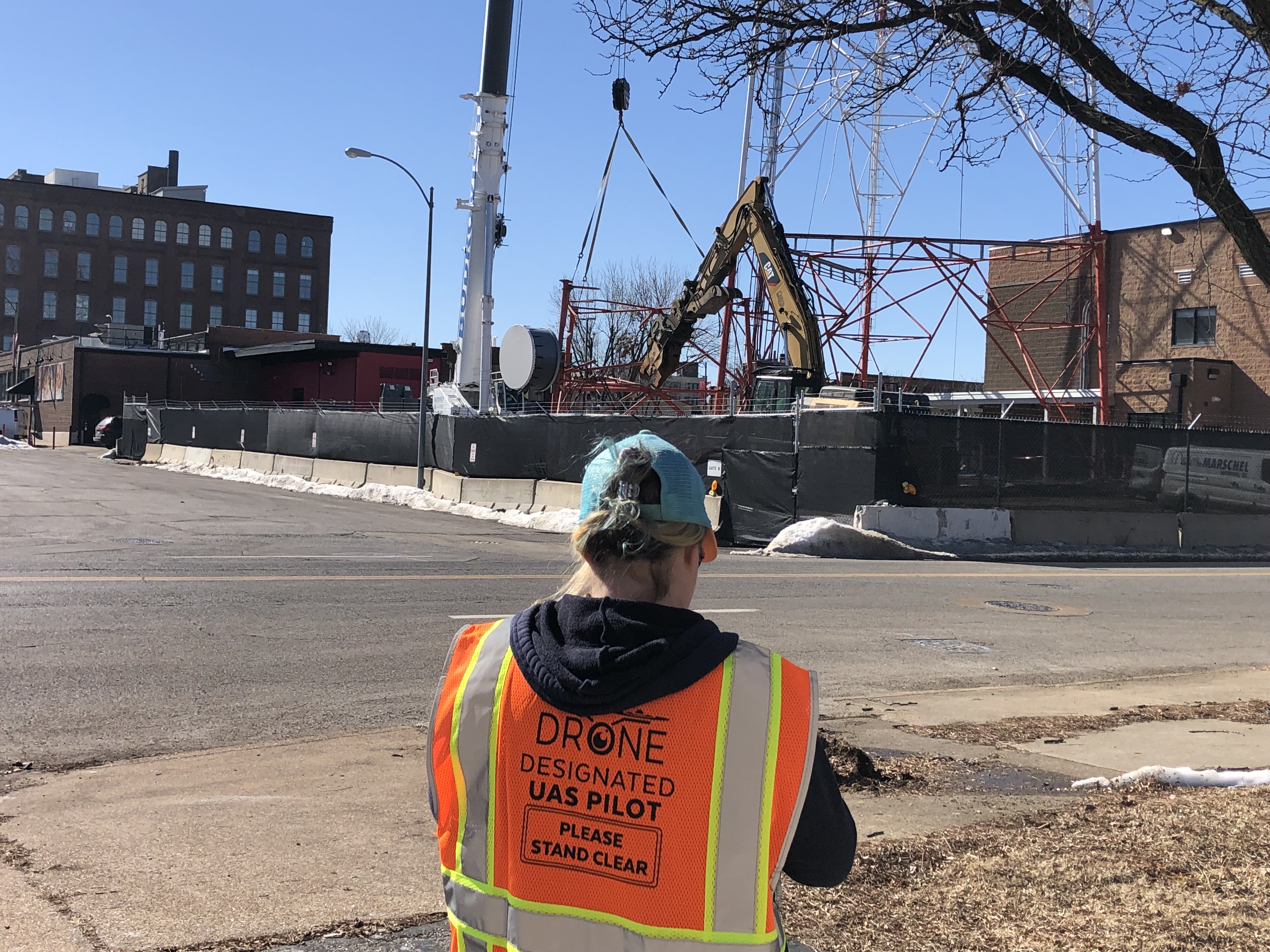
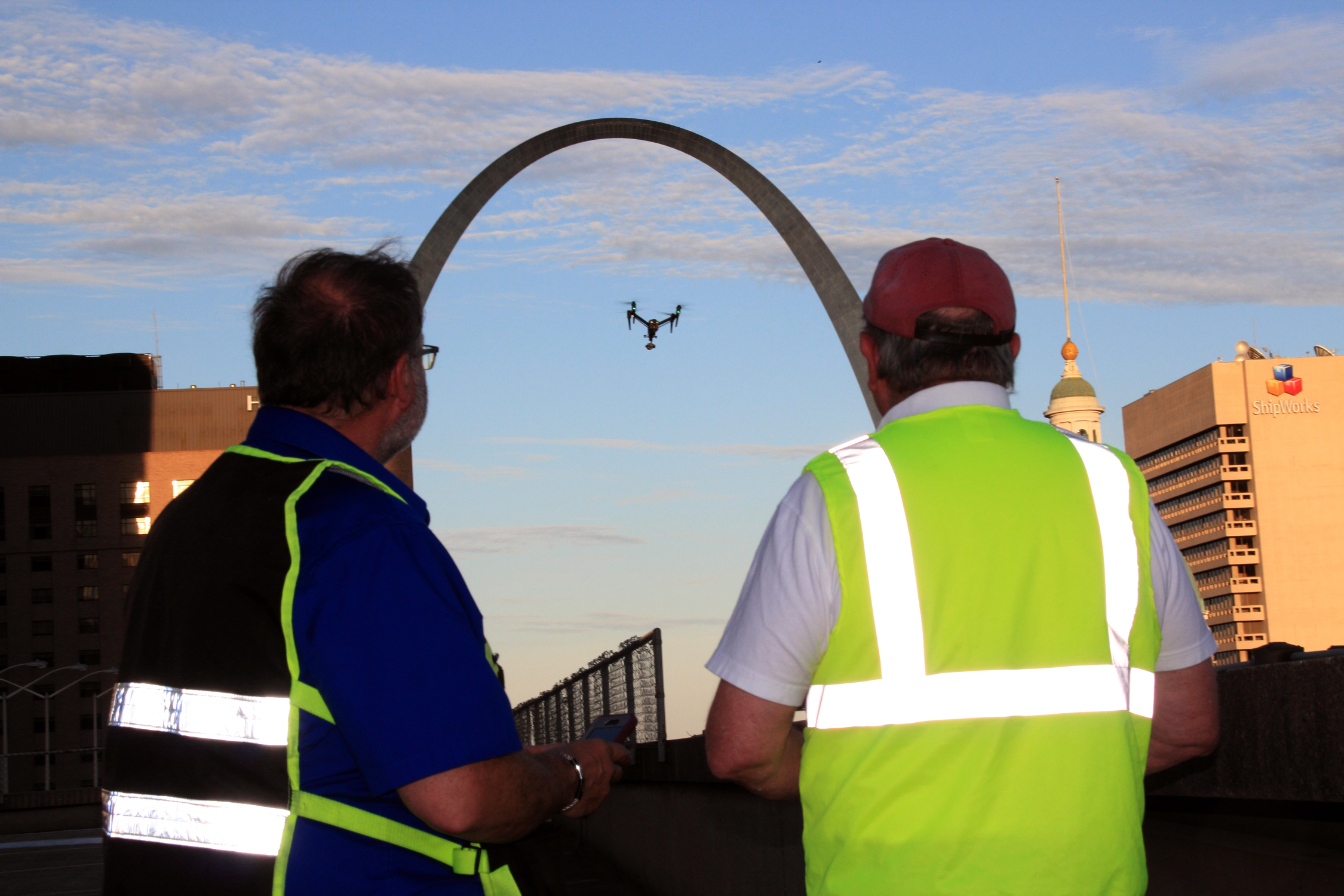
Credentials matter too. For commercial drone work in U.S. airspace, the FAA requires operation under Part 107, which means the operator must hold a Remote Pilot Certificate or be directly supervised by someone who does. The FAA also states that certificated remote pilots may operate at night, over people, and over moving vehicles when they meet the applicable rule requirements.

For clients, that means professionalism is not just about image quality. It is about compliance, safety, planning, documentation, and the judgment to know when thermal imagery is being used qualitatively versus when a client expects defensible temperature-based analysis.

Why thermal imagery is powerful for communication, not just inspection

There is another advantage that often gets overlooked: thermal drone imagery is visually persuasive.

For internal operations teams, it can help justify maintenance priorities. For property managers, it can support conversations with ownership groups, vendors, or tenants. For engineers and consultants, it can provide a fast visual reference that improves communication before more detailed testing begins. And for organizations in technical, industrial, energy, utility, construction, and facilities sectors, thermal visuals can also become strong assets for presentations, training, documentation, and strategic reporting.

That is especially useful for companies that want to pair inspection utility with strong visual storytelling. When thermal, visible, and conventional production assets are captured by the same creative team, the result is often more consistent documentation and more usable content across departments.
Why FLIR thermal drone services make sense in St. Louis

St. Louis businesses operate across a mix of older facilities, new developments, industrial properties, healthcare environments, schools, logistics sites, retail centers, and corporate campuses. Many of these buildings are large, complex, and expensive to maintain. A thermal drone inspection is not a cure-all, but it can be an efficient first step in locating patterns that deserve attention before problems escalate.

For organizations trying to reduce downtime, better manage maintenance budgets, improve inspection efficiency, or simply gain a better understanding of hard-to-access assets, FLIR thermal infrared drone services can deliver meaningful value. The key is working with a team that understands both the technical side of thermal capture and the broader production side of creating useful deliverables.

Work with an experienced St. Louis production team

At St Louis Video Services, we bring far more than a drone to the job. We are a full-service professional commercial photography and video production company with the right equipment, creative crew, and service experience for successful image acquisition. We offer full-service studio and location video and photography, as well as editing, post-production, and licensed drone services. Since 1982, St Louis Video Services has worked with many businesses, marketing firms, and creative agencies in the St. Louis area on marketing photography and video.
We can customize productions for diverse types of media requirements, and repurposing your photography and video branding to gain more traction is one of our specialties. We are well-versed in file types, media styles, and the software that supports them. We also use the latest in Artificial Intelligence for our media services. Our private studio lighting and visual setup is ideal for small productions and interview scenes, and our studio is large enough to incorporate props and build out a polished set. From designing a private custom interview studio to supplying professional sound and camera operators and the right equipment, we support every aspect of your production so your next project is seamless and successful. We can even fly specialized drones indoors when the production calls for it.

When you need FLIR thermal infrared drone services in St. Louis, along with a team that understands both technical image acquisition and high-level visual communication, St Louis Video Services is ready to help.
314-604-6544

stlouisvideoservices@gmail.com

Commercial Building Certified Thermal Drone Inspections:The Smarter, Safer Way to See What Your Roof Is Really Doing

When you manage or market a commercial property, you’re constantly juggling risk, budgets, and tenant expectations. Roofing and exterior building issues sit right at the center of that triangle—quietly developing out of sight until they become leaks, interior damage, or even business interruptions.

Certified thermal drone inspections have changed that equation.

Instead of sending people up ladders and across aging roofs with clipboards, modern facilities teams are using high-resolution thermal imaging drones to scan entire buildings quickly, safely, and with far greater insight. In just a short flight, you can see heat loss, trapped moisture, failing insulation, and HVAC anomalies that would be nearly impossible to spot from the ground.

Below is an expert overview of how certified thermal drone inspections work, the type of insights you can expect, and why partnering with an experienced visual media team like St. Louis Video Services gives you a real advantage over “guy-with-a-drone” providers.


What Is a Certified Thermal Drone Inspection?

A commercial thermal drone inspection combines:

  • Commercial-grade drone platforms
  • Radiometric thermal imaging cameras (not just “pretty colors,” but measurable temperature data)
  • Visible-light photography and video
  • Licensed, insured pilots familiar with FAA regulations and local airspace
  • Interpretable reporting that non-engineers can actually use

For commercial buildings, this typically focuses on:

  • Flat or low-slope roofing systems
  • Mechanical penthouses and rooftop HVAC equipment
  • Exterior walls and facade systems
  • Exterior electrical and utility infrastructure

The result is a set of thermal maps, annotated images, and visual documentation that facilities, engineering, and ownership teams can use to plan maintenance, validate warranties, and document conditions for insurance and capital planning.


Why Thermal Drone Inspections Beat Traditional Roof Checks

1. Safety First (and Always)

Traditional inspections expose people to:

  • Fall hazards on wet, fragile, or deteriorated surfaces
  • Trip hazards around mechanical units, conduits, and roof penetrations
  • Wind, ice, heat, and other environmental risks

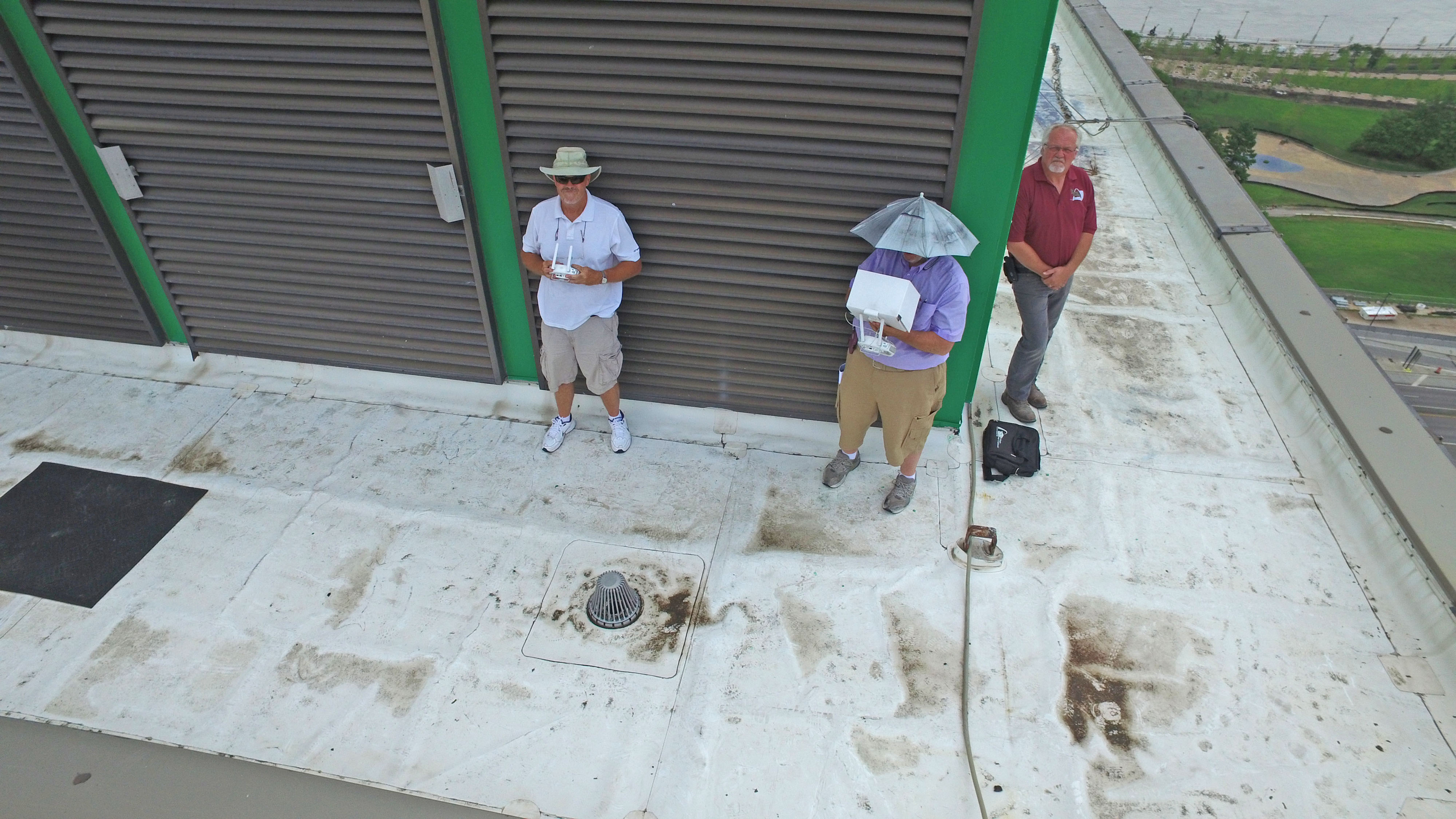
With a drone inspection, the pilot and crew remain safely on the ground while the aircraft does the risky work overhead. For safety-sensitive organizations and highly regulated sites, that reduction in exposure is a major win.

2. Speed and Coverage

A certified thermal drone can cover:

  • Large roof areas in minutes
  • Multiple buildings in a single flight plan
  • Complex shapes and hard-to-reach sections without special access or scaffolding

That speed means less disruption for tenants or operations and more frequent inspections throughout the year, instead of one high-risk visit after a problem appears.

3. Seeing What the Eye Can’t See

A visible-light photo shows you what the roof looks like.
A thermal image shows you what the roof is doing.

Thermal imaging can reveal:

  • Trapped moisture in roofing systems
  • Insulation failures and missing or compressed insulation
  • Thermal bridging at penetrations and structural elements
  • Heat loss around doors, windows, and curtain walls
  • Overheating electrical components and mechanical equipment

By comparing thermal signatures across the roof and exterior, you can locate anomalies long before they translate into leaks, mold, or energy waste.

4. Objective, Visual Documentation

Unlike a handwritten inspection checklist, drone thermal inspections give you:

  • Time-stamped imagery and video
  • Repeatable flight paths for “before and after” comparisons
  • Visual documentation that can be shared across teams, vendors, and insurance carriers

This is especially powerful for:

  • Warranty claims
  • Insurance documentation after storms
  • Pre-purchase due diligence on acquisitions
  • Capital improvement planning and budget meetings

When everyone can literally see the problem, decision-making gets faster and less contentious.


Key Use Cases for Commercial Building Thermal Drone Inspections

1. Flat Roof Moisture and Leak Detection

Water intrusion is the enemy of every flat roof. Trapped moisture can:

  • Compromise insulation performance
  • Accelerate membrane deterioration
  • Add weight to structural systems
  • Lead to mold and interior damage

Thermal imaging identifies areas where moisture saturates the roof assembly, creating “hot” or “cold” signatures relative to dry areas. A certified thermal operator can flag these suspect zones so your roofing contractor can perform targeted core samples or repairs—focusing time and money where it counts.

2. Energy Loss and Building Envelope Performance

Marketing “sustainability” and “efficiency” is only credible if your building envelope actually performs. Thermal inspections help you:

  • Identify missing or damaged insulation in walls and roofs
  • Spot drafts and air leakage around fenestrations and curtain wall systems
  • Benchmark the performance of newly upgraded insulation or windows

This data supports ESG reporting, energy audits, and marketing narratives for “green” and high-performance buildings.

3. HVAC and Mechanical System Health

On a rooftop, thermal drones can quickly scan:

  • Packaged rooftop units (RTUs)
  • Chillers and condensers
  • Ductwork and refrigerant lines
  • Exhaust fans and intakes

Hot spots or unusual temperature patterns can signal:

  • Failing bearings or motors
  • Restricted airflow
  • Refrigerant issues
  • Heat rejection problems

Facilities staff can then prioritize preventive maintenance and avoid unexpected breakdowns that impact tenants and operations.

4. Post-Storm and Insurance Documentation

After hail, wind, or severe weather:

  • A thermal drone inspection can rapidly assess damage across multiple structures.
  • High-resolution visual and thermal documentation supports insurance claims.
  • You get an objective record of conditions shortly after the event.

That combination of speed, safety, and documentation is particularly valuable for property managers handling multiple sites or portfolios across the region.


What “Certified” Should Mean to You

Not all thermal drone providers operate at the same level. When you hear “certified,” you should be looking for:

  • FAA-licensed drone pilots with experience flying in urban and industrial environments
  • Training in thermography fundamentals and building science
  • Understanding of commercial roofing systems and building envelopes
  • Compliance with local regulations, site safety rules, and insurance requirements
  • Clear, actionable reporting instead of raw data dumps

At St. Louis Video Services, our background as a professional video production team matters here. We’re not just flying a drone—we’re planning reliable, repeatable image acquisition with clear storytelling in mind, whether the “audience” is your engineering staff, your insurer, or your executive team.


Turning Data Into Decisions: Deliverables You Can Actually Use

A strong commercial thermal drone inspection should deliver more than heat maps. Typical deliverables can include:

  • Overview report highlighting key findings, anomalies, and recommended next steps
  • Georeferenced still images of thermal and visible-light captures
  • Annotated callouts marking areas of concern with coordinates and photographs
  • Short interpretive video walking your stakeholders through the findings
  • Data files for engineers, roof consultants, or capital planners who need to dig deeper

Because our core business is visual communication, we ensure the output speaks to both technical and non-technical audiences. That’s critical when you’re presenting findings to ownership, boards, or non-engineering decision makers.


How Facility, Marketing, and Ownership Teams Benefit

For Facility Managers & Engineers

  • Faster, safer condition assessments
  • Better targeting for repairs and maintenance
  • Clear documentation for vendors and contractors

For Property & Asset Managers

  • Stronger documentation for lease negotiations and CAM discussions
  • Visual support for capital expenditure requests
  • Supporting evidence for insurance and warranty claims

For Marketing & Leasing Teams

  • Authentic visual content for “well-maintained,” “energy-efficient,” or “sustainability-focused” messaging
  • Before/after visuals to showcase improvements, retrofits, and upgrades
  • Confidence-building materials for prospective tenants or buyers

For Ownership & Investors

  • Reduced risk of surprise failures
  • Better information for long-term capital planning
  • Visual evidence that building systems are being proactively managed

Why Partner With a Full-Service Visual Production Team?

Certified thermal drone inspections live at the intersection of technology, building science, and communication. Many providers can handle one or two of those. Fewer can consistently deliver all three.

As an experienced videographer, photographer, and producer at St. Louis Video Services, we approach commercial building thermal inspections with the same discipline we bring to high-stakes corporate productions:

  • Pre-planning and scouting to understand your site, access, and regulatory needs
  • Shot planning and flight paths to ensure comprehensive coverage
  • Careful timing of flights for optimal thermal contrast (for example, after sufficient solar loading or at specific times of day)
  • Precise execution in the air and on the ground, coordinated with your operations
  • Professional post-production to turn raw data into clear, shareable visual reports

And because we are already embedded in corporate and industrial environments—shooting marketing content, training videos, and documentation—we understand how to work around your live operations with minimal disruption.


About St. Louis Video Services

St. Louis Video Services is a full-service professional commercial photography and video production company with the right equipment and creative crew experience for successful image acquisition. We offer full-service studio and location video and photography, as well as editing, post-production, and licensed drone pilots.

For commercial building projects, we can customize your productions and inspections for diverse types of media and documentation requirements—from technical thermal reporting for facility teams to polished visual content for marketing and investor presentations. Repurposing your photography and video branding to gain more traction is another specialty. We are well-versed in all file types, styles of media, and the accompanying software your teams already use.

We leverage the latest in Artificial Intelligence across our media services to help analyze, organize, and enhance your visual assets—while keeping human expertise firmly in control of interpretation and storytelling. Our private studio lighting and visual setup is perfect for small productions and interview scenes, and our studio is large enough to incorporate props and environmental elements to round out your set.

We support every aspect of your production—from setting up a private, custom interview studio to supplying professional sound and camera operators, as well as providing the right equipment—ensuring your next video production or inspection-driven communication is seamless and successful. Our specialized drones can even be flown indoors for certain controlled environments, adding unique perspectives in warehouses, plants, and large interior spaces.

As a full-service video and photography production corporation since 1982, St. Louis Video Services has partnered with businesses, marketing firms, and creative agencies throughout the St. Louis area for their marketing photography, video, and now certified thermal drone inspection needs. If you’re ready to see what your buildings are really doing—and communicate that story clearly to every stakeholder—we’re ready to help.

314-604-6544

stlouisvideoservices@gmail.com